
Chernobyl
The post-human, post-disaster landscape of Chernobyl left an imprint. The creeping reclamation of nature - a force to behold.

I’ve been wanting to write something about my visit in November 2021 to Ukraine for a while. I’m going to start with a bit about Chernobyl, inspired by yet another book that I’m currently reading - Island of Abandonment by Cal Flyn. Her book details life in various places abandoned by humanity and overtaken once more by nature - from vast swathes of long run-aground Soviet farmland acting as carbon sinks to bustling ecosystems harbouring rare life on abandoned bings (slag heaps) in Scotland and within shells of buildings in buffer zones in Cyprus.
The chapter that is most relevant for this meandering is obviously about Chernobyl. Flyn starts her account with a description of Liubov Kovalevska’s middle of the night awakening at 1:23am on 26th April 1986. On a winter’s night laden with a blanket of stars, a rumbling and two flashes tore through the moonlight. A glow reached up into the sky accompanied shortly after by embers of fire rising from the wreckage of the nuclear plant.
Fire can be a tool of ritual, of community-building and gathering, as I saw in January at Up Helly Aa in Lerwick, Shetland. But when it leaps into the sky, releasing toxic nuclear waste into the atmosphere, your perspective is likely to be a little different. The sky turned, according to a worker in Flyn’s account, “the colour of blood… no… like a rainbow”. Gone were the twinkling stars on a velvety black background. Now, the beauty of a disaster that would change the lives of millions was beheld.
You may have seen the “bridge of death” scene from the Chernobyl series on TV, and although it’s not that accurate, it gives a sense of the destruction unfolding in front of people who were completely unaware of the dangers. As radiation snowed down upon the residents of Pripyat, life continued. It would only be when the streets filled with armoured vehicles and masked men and when people started getting sick that they realised what perils had lain in wait for them.
It happened on a warm spring day, a lovely day for the world to turn upside down. Nobody would tell residents living in close proximity to the imploding reactor what was happening. It wasn’t until the next day that people were told to leave. They hopped on buses, expecting to return in a couple of days, taking only a change of clothes and some paperwork with them. Many would never return.
I went to Pripyat on a tour - there is a strange form of tourism that has taken hold in the nooks and crannies of destroyed and dark places worldwide. Some people call it “dark tourism”, a type associated with death and tragedy. I can’t say that was why I visited Chernobyl. Having studied Russian for the past few years and spent the months preceding my Ukraine trip living in Moscow, I was increasingly interested in Soviet and post-Soviet history. The Chernobyl nuclear disaster is an inescapable factor in Soviet history - in tragedy and a complete failure to communicate any sense of urgency. It was to understand more of life, and death, in Soviet times, that I embarked upon this tour and hopped on a bus bound for the exclusion zone.
Naturally, the Geiger counters that were handed out to my tour group and I were quite exciting. It went without saying that one shouldn’t touch or lick the ground - although the tour guide told us that it was quite safe as long as you didn’t dig any holes. The radiation had seeped down a few feet into the earth, so things weren’t too dangerous. Our Geiger counters did, in certain areas, bleep madly - as you can see in the video below.
The ground was covered with a considerable dusting of snow during my visit - which, if you squinted, could almost be mistaken for radiation. It sat idly on rooftops, slumped in heaps at the side of the road and sat peacefully atop the abandoned hillocks and farmland beyond the constraints of the residential areas. Of course, radiation is actually invisible. The rays that passed through the bodies of people who died after the accident and got sick in the following months weren’t seen, heard or felt. Nor were the rays that passed through my own body during my hours wandering around. But the feeling of snow falling on my face felt almost like it was trying to tell me something - about what invisible danger feels like.
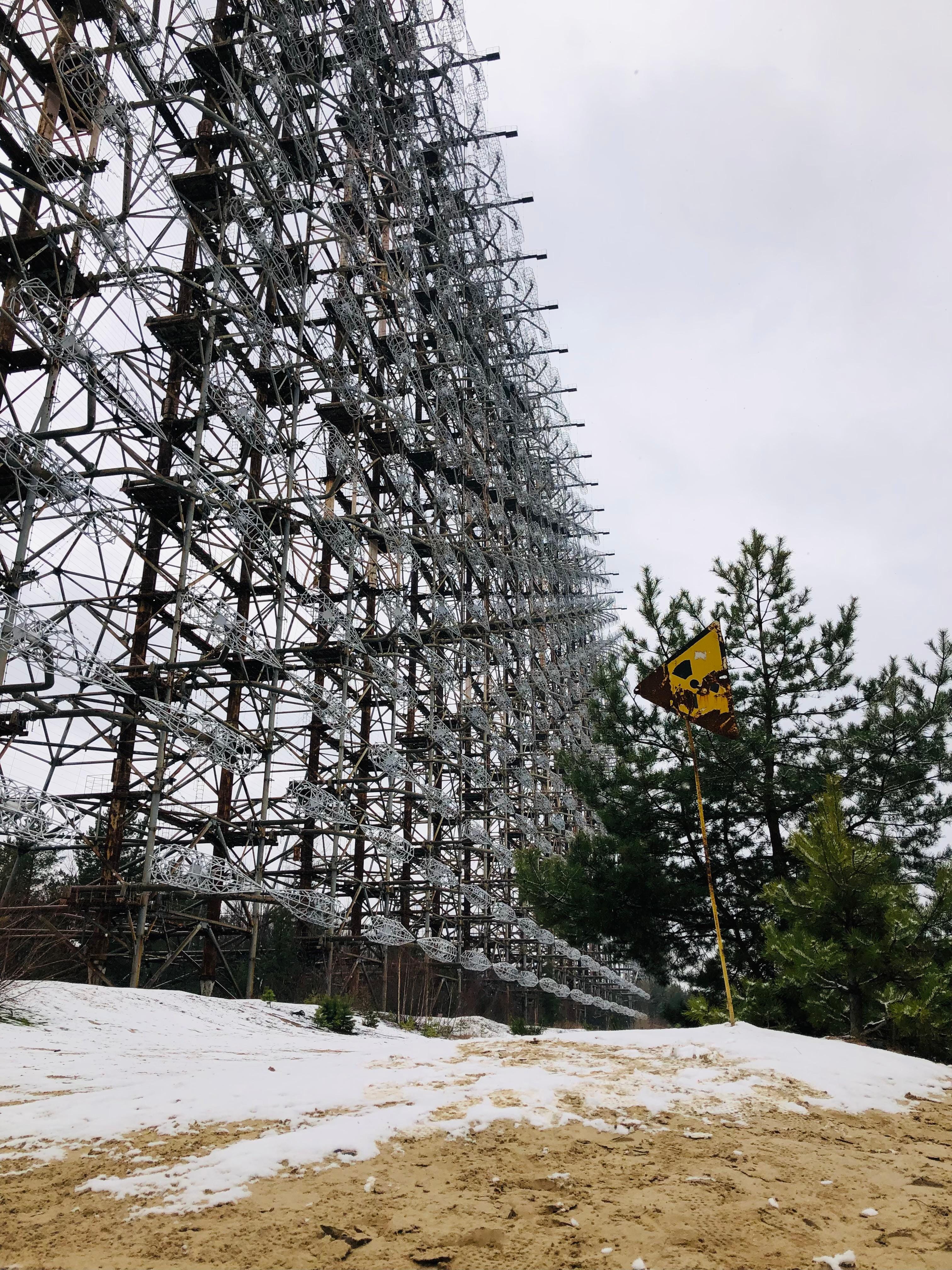
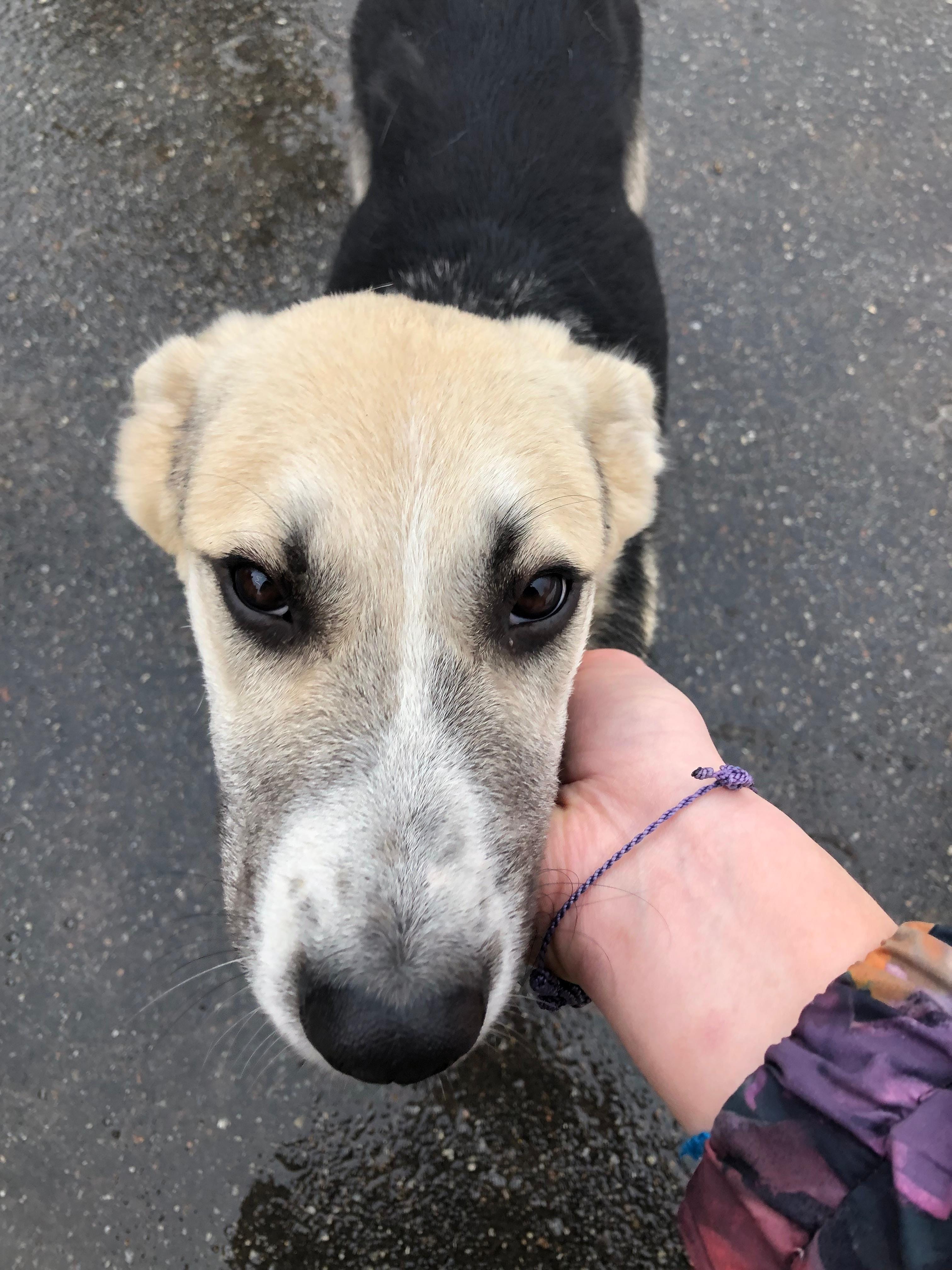
Near the Duga Radar (one of two early-warning missile defence radars deployed in the Soviet Union, the other in Siberia), the ground was less disturbed. Further from the confines of urban destitution, things felt wilder, untamed. In the lands enclosed by the exclusion zone around Chernobyl things have got wild indeed - many animals have taken up residency within the area, thriving in the absence of human disruption. The Przewalski's Horse was introduced in 1998 and has gone from strength to strength. There are also a number of dogs roaming around, fed by tourists and the few remaining residents. Of course I petted them - even if there was a risk of them being radioactive (photo at the bottom for evidence).
The overriding sensation I had from walking around the dusty, broken shells of Soviet life was of silence. Other than the pattering of snow onto the ground and the occasional crunching of glass beneath my feet, it was eerily quiet. The usual signs of urban life were absent - the sounds of cars, people talking, sirens in the distance. A lack of sound pervaded my experience, and the eerie abandonment played into a narrative of ghostly inhabitants - perhaps to the excitement of those pursuing “dark tourism”.
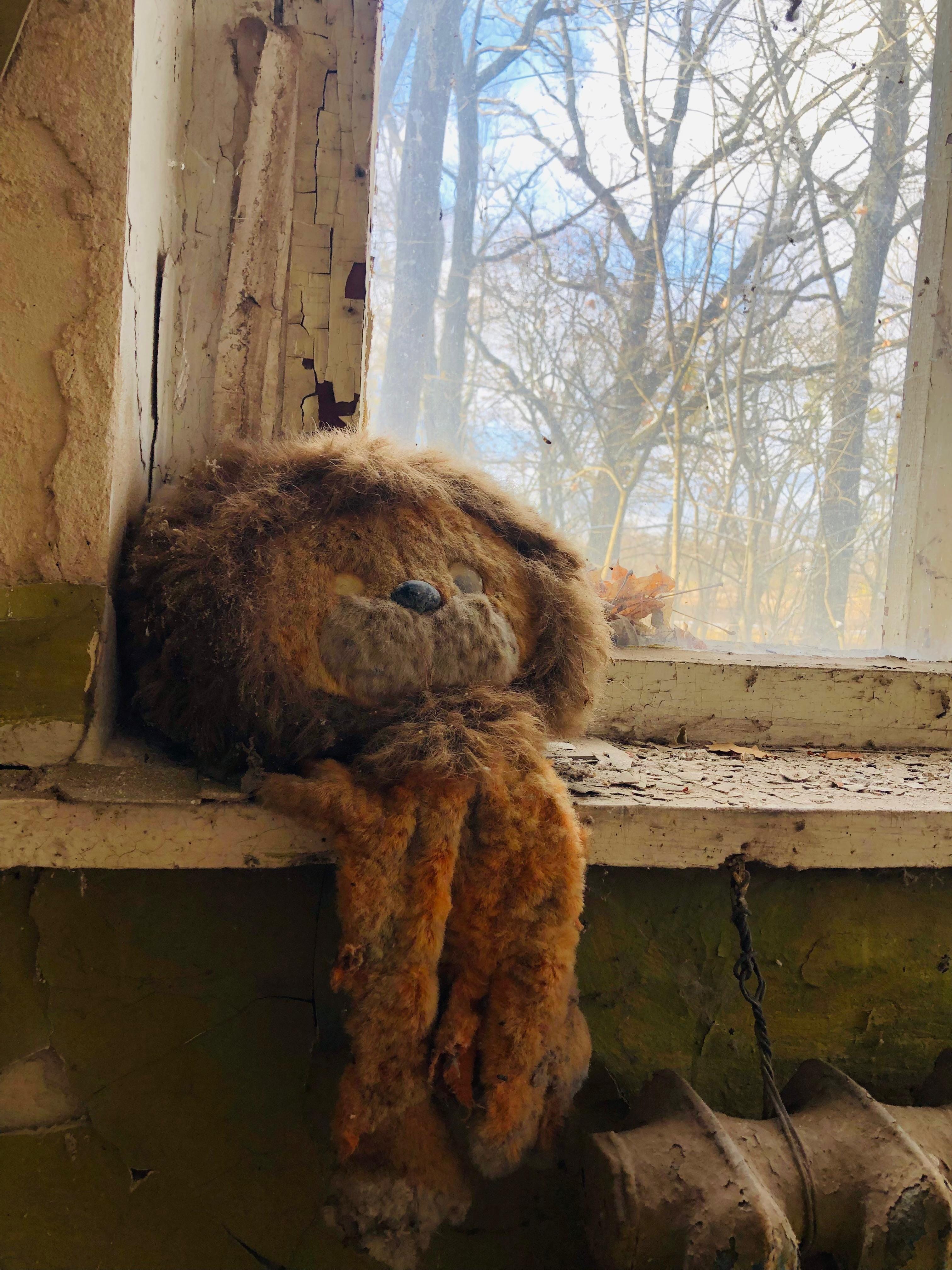
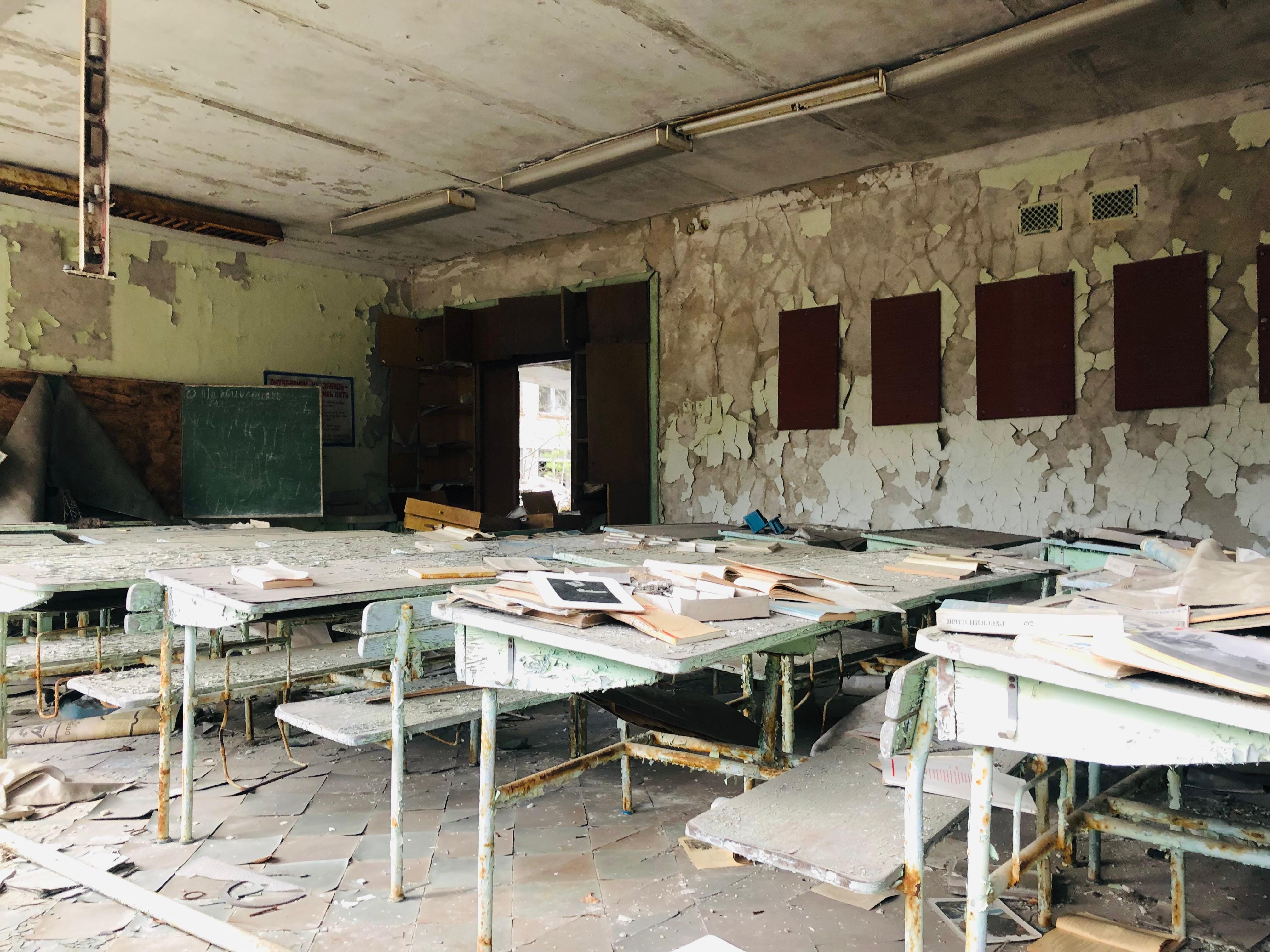
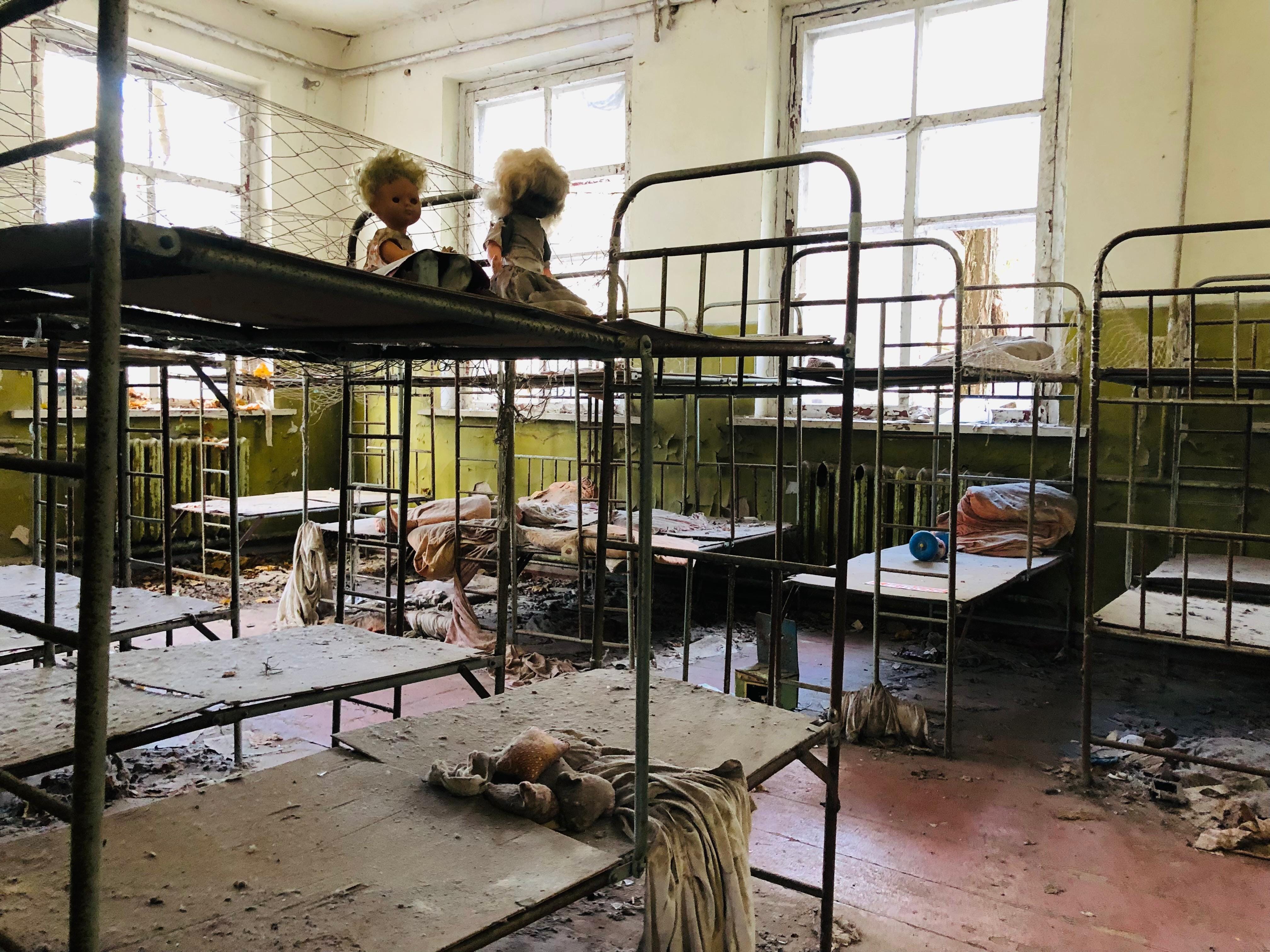
The streets were littered with buildings in varying states of decay - some we could enter, some which were unsafe. Each building I entered felt stale. Every room offered an oppressive sense of stillness, although the breeze that scuttled through the empty window frames reminded you that the world was still moving. The freezing air and grey clouds framed the landscape through each aperture, and from within one room of destruction you could look out at a picture of yet more destroyed and dishevelled concrete. The iconic Krushchevka apartments, Soviet architectural gems (if you’re into plain, identical 5-storey apartment blocks) took on a different light in the hues of grey and grim decimation.
The omnipresent devastation - not just of sprawling concrete developments but of lives lost and left behind - sat heavy in the air. It’s ironic, really, that you should embark upon a tour to a site of tragedy and be surprised by encountering just that, but you could feel the weight of institutional failure and a complete lack of consideration for the value of human life behind every door (or every doorway, for most of the doors were broken or absent).
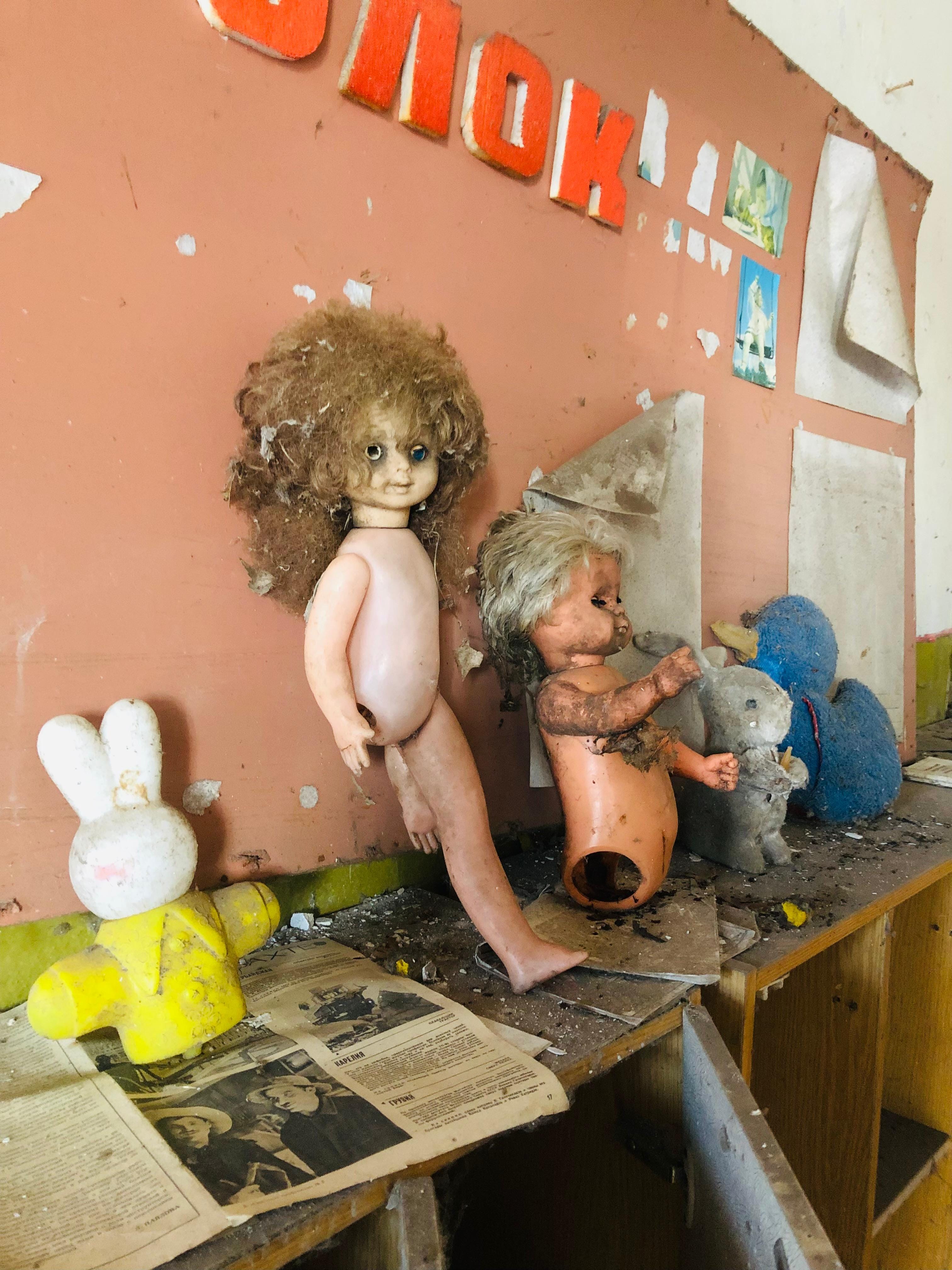
I might have been there for the history and political sentiment, to feel the void of empathy that existed in Soviet times, but Cal Flyn was there to see how nature was taking back control. She writes about bird nests balancing in fuse boxes, on bookshelves and in desk drawers, of ferns sprouting in damp corners of rooms. She recalls branches reaching in from the outside, and of yet more sprouting within buildings and reaching up to the sky through openings and collapsed ceilings.
At times, it felt like a film set. It would be a good place for a post-apocalyptic scene of destruction - but the dangers of lifting a trapdoor on decades of radioactive waste would probably not make it worth the effort. Flyn writes about the “new forest that invades the city” and “rumples the road, pushing its roots under the asphalt like limbs beneath a bedspread”. It’s this sense of resurrection - of nature claiming what was torn from its womb, placing firm feet back on land - that she captures in her book.
70% of the exclusion zone is now forest. Birch, maple and poplar trees cast a thick litter of leaves onto the ground each autumn - to be topped with a layer of snow as winter tightens its grip on the empty buildings. Apartment blocks rise like concrete islands from a sea of branches: bare, given the season, but green and verdant most certainly in the spring and summer months.
Though the explosion at Chernobyl was only a fraction of the force of the atomic bomb dropped on Hiroshima, the nuclear fallout was around 400 times greater due to the huge amount of nuclear fuel kept within the damaged reactor. Two died in the hours after the explosion, 28 more lost their lives in the first few days from radiation poisoning and 134 were hospitalised with radiation sickness. Approximately 200,000 people working to clear the area were exposed to five times the internationally accepted maximum annual dose of radiation.
Pregnant animals in the area miscarried, their embryos dissolving inside them. Horses 4 miles away died as their thyroids disintegrated. An entire forest of pine trees was scorched red, dropping needles to the ground and standing dead for decades. Who knows how long the rows of trees will stand, broken, awaiting the retribution of further decay. The 1,600 mile exclusion zone is the most radioactive environment on Earth, still to this day. There are, however, a few people who still live within the confines of the “dead zone” - who refused to leave, or who have returned since the evacuation of approximately 234,000 local residents.
As things stand, wildlife abounds in the exclusion zone - lynx, boar, deer, elk, brown bears, beavers, wolves, eagle owls, horses and dogs live seemingly bountiful lives in the shadows of disaster. Finding sanctuary in a place of darkness is perhaps a nice metaphor for life - although make sure you wait until the dust (or radiation) settles a little. Don’t be risking your life just to get a moment’s rest in an abandoned nuclear reactor. Maybe radiation is a reliable guardian against the destruction of greedy developers keen to make a quick buck and offer luxurious penthouse apartments.
With much of the immediate danger having passed, things could be a bit safer. The most dangerous product of nuclear fission, iodine-131, sits in the thyroid gland and emits harmful radiation that can damage flesh and cause the gland’s destruction or cancer at lower levels (at least 4,000 cases of thyroid cancer in children across Belarus, Ukraine and Russia were attributed to the disaster at Chernobyl). By the mid 1990s, radiation in the area was over 100 times lower than immediately after the accident.
At the start of my tour, I was presented with a leaflet saying I would only pick up as much radiation throughout the day as one might on a plane ride. What’s most reactive now is the flora and fauna - as causium-137 and strontium-90 both have a half-life of around 30 years and are readily making their way up the food chain. But, clearly, animals living in the area are still living, so damage levels aren’t necessarily life-threatening (although we can’t see the mutations and stillborn babies so easily). Radiation accumulates in lichen, pond scum, snail and mussel shells, birch sap, fungi, wood ash and human teeth. It will take another 270 years before radioactivity levels are relatively safe. The effects of long-term, low-level radiation are unclear, but likely not the best.
Here’s the pic of a dog (one of many I got to meet during the day):
Reading this, I felt like I was stepping into the world of Tvardovsky’s Stalker, such an atmospheric, haunting vibe. I hope to make it to Chernobyl someday too. Really incredible experience!